

Vintage vs Non Vintage Champagne: What to Buy
Table of Contents
- Vintage vs Non Vintage Champagne: The Short Answer
- What the Vintage Champagne Meaning Actually Is
- Non Vintage Champagne Meaning: The House Style Explained
- Price, Ageing Potential and What You Actually Pay For
- How Long to Keep Champagne Before It Fades
- Champagne Food Pairings for Each Style
- When to Choose Vintage and When to Choose Non Vintage
- Frequently Asked Questions
Last Updated: October 22, 2026
Vintage vs Non Vintage Champagne: The Short Answer
Vintage Champagne comes from a single harvest year and spends longer ageing on its lees; non vintage Champagne blends several years to create a consistent house style. The short answer: buy vintage when you want depth, toast and ageing potential, and buy non vintage when you want reliability, freshness and value. This guide from WINESLUT breaks down what actually separates the two, so the next bottle you pick matches the occasion rather than the label.
The difference is not simply quality versus quantity. A well-made non vintage can outperform a tired vintage bottling, and the reverse is just as true. What separates them is intent: vintage Champagne is a statement about one year, while non vintage is a statement about the house.
Below, we'll show you exactly how to read a label, what each style costs you in real terms, and which one suits dinner, gifting or a Tuesday night.
What the Vintage Champagne Meaning Actually Is
Vintage Champagne is a sparkling wine made entirely from grapes harvested in one declared year, aged on its lees for a minimum of three years and often far longer. That single-year rule is the whole point: the wine is meant to express one harvest, one growing season, one set of conditions.
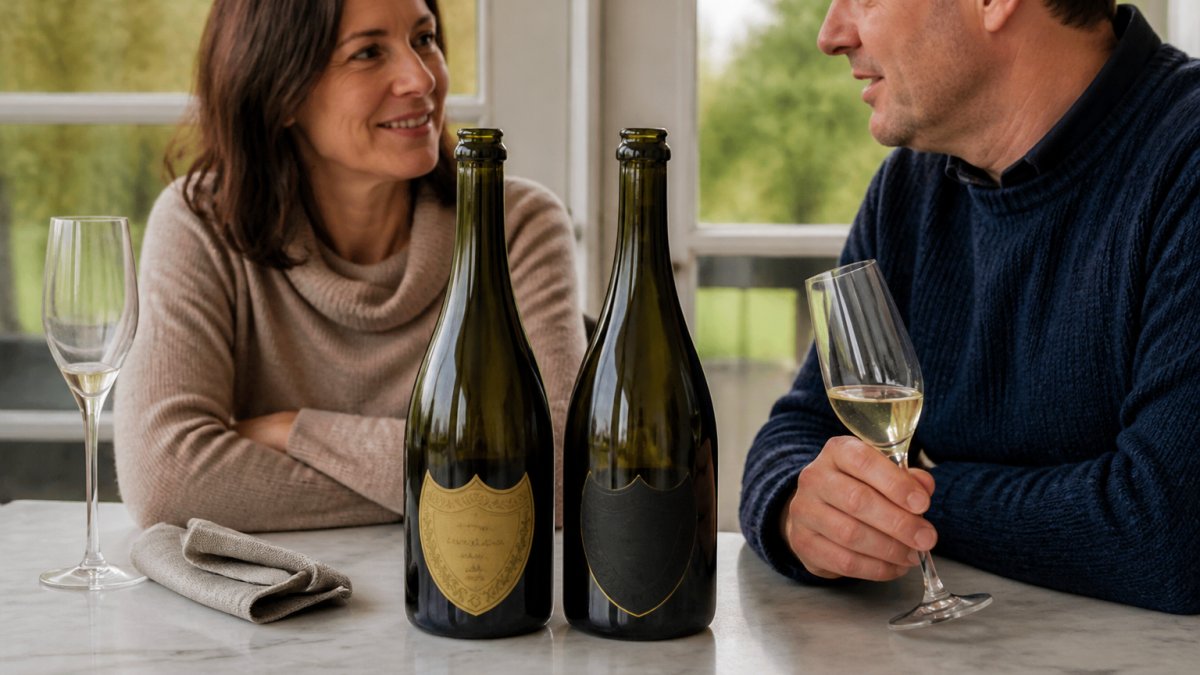
Houses only declare a vintage in years they consider strong enough. That is why you will not see a 2021 from every producer, and why a declared year carries a quiet signal about the harvest. The wine typically sees longer lees ageing, which builds the brioche, toasted nut and cream notes that vintage fans chase.
How to Spot a Vintage Bottle
Look for a four-digit year printed on the label, usually below the house name. No year, no vintage. Some houses also print a disgorgement date on the back label, which tells you when the bottle was riddled and corked, a useful clue to how long it rested.
A few practical checks:
- A year on the front label, not just a lot code
- The word "Millésimé" on French labels
- A back label with disgorgement details
- A noticeably higher price than the house's standard bottling
If the year is missing, you are holding a non vintage. That is not a downgrade, it is a different product.
Non Vintage Champagne Meaning: The House Style Explained
Non vintage Champagne is a blend of wines from multiple years, assembled to produce the same consistent taste every time you buy it. The house is not chasing a single harvest; it is protecting a signature. That is why a familiar non vintage bottling tastes recognisably like itself year after year.
This is the style most of us drink most often, and it is where a producer's skill really shows. Blending across vintages is harder than it sounds. The winemaker has to balance acidity, fruit and age, then repeat the trick next year.
Why Reserve Wines Do the Heavy Lifting
The backbone of non vintage is reserve wine: stocks held back from previous years and folded into the blend. Some houses keep a perpetual reserve, topping it up each harvest like a sourdough starter. The older the reserve, the more depth and complexity the final blend carries.
That is why a non vintage from a serious grower can taste far richer than its price suggests. The reserve does the work that a single year cannot.
Price, Ageing Potential and What You Actually Pay For
Vintage Champagne costs more because it spends longer in the cellar, comes from a declared year and is produced in smaller volumes. You are paying for time, selection and scarcity, not just a fancier label.
The ageing question cuts both ways. Vintage Champagne is built to develop, so a well-stored bottle can gain honeyed, nutty notes over years in the cellar. Non vintage is blended to drink well on release, though good examples hold for a while too.
| Factor | Vintage Champagne | Non Vintage Champagne |
|---|---|---|
| Grapes | Single declared year | Blend of several years |
| Lees ageing | Minimum three years, often more | Usually 15 months to two years |
| Flavour profile | Depth, toast, nuts, honey | Fresh citrus, orchard fruit, consistency |
| Ageing potential | Built to develop in bottle | Made to drink on release |
| Price | Higher | Lower |
| Best for | Milestones, cellaring, gifting | Regular drinking, parties, apéritifs |
At WINESLUT, the grower bottles on the shelf show this split clearly. A single-vintage Grand Cru such as the Lancelot Pienne Cuvée Marie Lancelot Blanc de Blancs Grand Cru at £84.95 rests on its lees for a full five years. The Larmandier Bernier Longitude Blanc de Blancs Extra Brut 1er Cru at £85.95 takes the other route, blending 40% perpetual reserve wine for a consistent house signature. Two bottles, two philosophies, similar money.
Larmandier Bernier Longitude Blanc de Blancs Extra Brut 1er Cru →


How Long to Keep Champagne Before It Fades
Most Champagne is not built for decades, and treating every bottle like an investment is a mistake. Standard non vintage is best within two to three years of purchase, and it will not improve with waiting. Vintage bottlings from a strong year can develop for a decade or more in good conditions.
Storage matters more than the calendar. Keep bottles lying down, away from light, at a steady cool temperature, and away from vibration. A cupboard above the oven will undo the work of five years on the lees in a single summer.
For guidance on how sparkling wines are classified and aged, the Comité Champagne's official explainer is a solid reference point.
A simple rule: if you bought it to drink, drink it. If you bought it to hold, know why.
Champagne Food Pairings for Each Style
Non vintage Champagne is the more flexible food wine, because its freshness cuts through fat and salt. Vintage Champagne has more weight and toast, so it suits richer dishes where a leaner wine would get lost.
Pair by weight, not by rule:
- Non vintage with oysters, prawns or a plate of chips. The acidity does the work.
- Non vintage with fried food and salty snacks. Bubbles and crispness reset the palate.
- Vintage with roast chicken, lobster or buttery fish. The depth matches the richness.
- Vintage with mushroom dishes and aged hard cheese. The nutty, honeyed notes find a partner.
- Vintage blanc de blancs with scallops or sashimi. Chalky minerality and clean fruit.
The Lancelot Pienne bottling above is a blanc de blancs built for exactly this: its listing suggests oysters, seared scallops, white fish sashimi with yuzu, or lobster tail in clarified butter. That is a vintage wine doing what vintage does best.
When to Choose Vintage and When to Choose Non Vintage
Choose vintage for a milestone, a serious dinner, a gift that needs to say something, or a bottle you plan to cellar. Choose non vintage for celebrations where the bottle count matters, for apéritifs, for regular drinking and for anything where consistency beats surprise.
There is a third path worth knowing: grower Champagne. Small family estates, the kind WINESLUT focuses on, often make both styles in modest quantities, and their non vintage can carry more character than a big house's entry bottle. The Wine Scholar Guild's guide to grower Champagne explains why the grower movement changed what drinkers expect from both categories.
If you are building a mixed case, the honest split is one vintage bottle for the occasion and two or three non vintage for everything else. That is not settling. It is buying sensibly.
The real challenge is not learning the difference between the two styles; it is finding bottles where that difference actually shows. WINESLUT hand-picks from small, independent and family run vineyards, so every bottle is chosen on character rather than brand weight. Free delivery applies on orders over £110, dispatch is next working day and bottles arrive carefully packed, with flexible payment through Klarna and age verification at checkout. Discover exceptional wines and let the label do less talking.
Frequently Asked Questions
What is the difference between vintage and non vintage Champagne?
Vintage Champagne comes from a single declared harvest, printed as a year on the label, and spends longer on its lees before release. Non vintage blends wines from several years, topped up with reserve wines from older harvests, so the house style stays consistent bottle to bottle. Vintage shows what one growing season did. Non vintage shows what the winemaker does every year, which is why it is usually the cheaper and more reliable of the two.
Is vintage Champagne better than non vintage?
Not automatically. Vintage is rarer and usually costs more because it only exists in years the house chooses to declare, and it ages longer before release. But better depends on what you want. If you want a bottle to drink tonight with a takeaway, a well made non vintage does the job and often tastes fresher. If you want something to open in ten years, or a bottle that says something specific about a year, vintage is the one to buy.
How long can you keep vintage Champagne?
A vintage Champagne from a solid producer will generally hold for ten to twenty years from the harvest, and the best examples go longer. Most are released already aged and ready to drink, so keeping them is optional rather than required. Store bottles lying down, away from light, at a steady temperature well below room heat. Non vintage is built for drinking within a few years of purchase and does not gain much from extra cellaring.
When should you choose vintage Champagne over non vintage?
Choose vintage when the year matters: a birthday, an anniversary, a milestone worth marking with a bottle from that harvest. Choose it too when you want more depth and less fruit forward freshness, and when the food is rich enough to handle it, such as roast chicken or seared scallops. For aperitifs, large gatherings and everyday celebrating, non vintage keeps the cost sensible and the style consistent.