

Wineslut Pro Corkscrew: How to Use It Properly
Table of Contents
- Why the Wineslut Pro Corkscrew Beats the Drawer Full of Broken Ones
- How to Use the Wineslut Pro Corkscrew in Four Steps
- How to Use a Waiter's Corkscrew Without Wrestling the Bottle
- How Far to Twist, and Other Tips for Best Results
- How to Remove a Broken Cork Without Pushing It Into the Wine
- Why a Wine Corkscrew With Foil Cutter Saves You Time
- Looking After Your Corkscrew So It Lasts
- Frequently Asked Questions
Last Updated: 20 October 2026
Why the Wineslut Pro Corkscrew Beats the Drawer Full of Broken Ones
Most kitchen drawers hold at least one corkscrew that has given up. The handle spins, the worm is bent, or the whole thing folds shut halfway through a bottle. The Wineslut Pro Corkscrew is a professional-style waiter's friend built to end that cycle: a double lever, a coated worm and a foil cutter in one steel tool.

This guide from WINESLUT covers exactly how to use it, step by step. No sommelier certificate required.
Here's what most guides get wrong. They tell you to pull. You should not pull at all. The lever does the lifting, and once that clicks, broken corks stop happening.
The tool costs £14.95 and is made in Italy from heavy duty steel. It is the same style of opener used behind the bar in wine bars, chosen because it works on natural and synthetic corks alike.
How to Use the Wineslut Pro Corkscrew in Four Steps
Using the Wineslut Pro Corkscrew takes four moves: cut the foil, seat the worm, lift on the first lever, then lift on the second. The whole thing takes about ten seconds once you have done it twice.
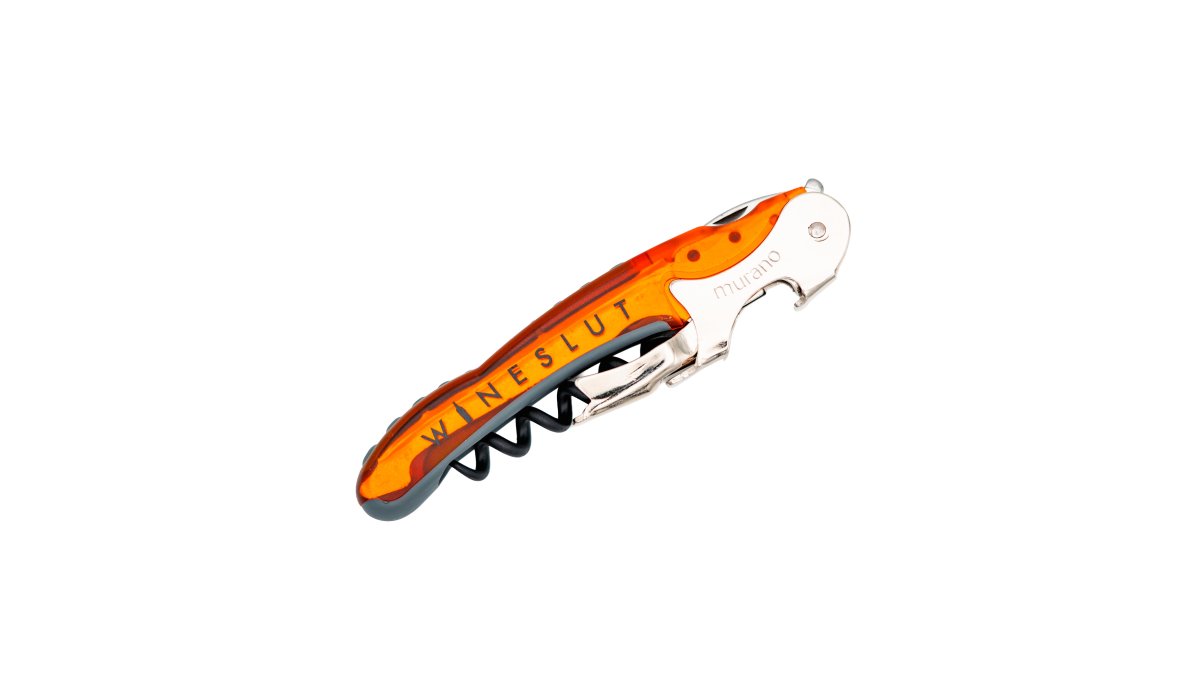
The key is the double lever mechanism. It lifts the cork straight up in two stages rather than dragging it out at an angle. Straight up means no crumbled edges.
Step One: Cut the Foil
Swing out the serrated blade and slice around the neck just below the lip. One clean turn is enough.
- Cut below the rim, not through the middle of the capsule
- Keep the blade flat against the glass
- Peel the top cap away and wipe the neck
A neat cut looks better and stops foil shreds dropping into the glass.
Step Two: Seat the Worm and Make the First Lift
Fold out the small worm, point it at the centre of the cork, and twist clockwise. Stop when one full spiral is still showing above the cork.
Then hook the first, shorter lever notch onto the lip of the bottle. Press down. The cork rises about halfway.
Step Three: The Second Lever and the Final Pull
Move the lever to the taller notch and press again. The cork lifts clear with almost no effort. Ease it out by hand at the very end so it doesn't pop.
The Teflon-coated worm glides into natural and synthetic corks without tearing them, which matters if you plan to re-cork the bottle.
How to Use a Waiter's Corkscrew Without Wrestling the Bottle
The trick to how to use a waiter's corkscrew is to never pull with your arm. Hold the bottle steady on a flat surface, keep the tool vertical, and let the lever do the work.
- Stand the bottle up, don't tilt it
- Grip the bottle neck, not the body
- Keep the corkscrew in line with the bottle
- Press the lever down slowly
Wrestling happens when the tool sits at an angle. That is what snaps corks.
How Far to Twist, and Other Tips for Best Results
Twist until one full spiral of the worm is still visible above the cork. Going deeper punches through the bottom and drops crumbs into the wine.
A few more things that make a real difference:
- Dry the neck before you start, so the lever doesn't slip
- Chill sparkling wine first, since warm bottles push corks out fast
- Wipe the worm after each use to keep the coating smooth
- Open away from your face on older, softer corks
- Keep a spare in the kitchen and one in the picnic bag
The Wineslut Pro Corkscrew earns its place in the drawer rather than rattling around in it.
How to Remove a Broken Cork Without Pushing It Into the Wine
How to remove a broken cork comes down to one rule: never push down. Angle the bottle at about 45 degrees and work the remaining cork towards the neck.
Try these in order:
- Re-insert the worm at a slight angle into the broken piece and lift slowly
- Use the tip of the worm to hook the edge and ease it up
- Pour through a fine sieve into a jug if a small piece drops in
- Filter the wine back into the bottle or straight into glasses
A small crumb in the glass is harmless. A whole cork pushed through is not, because it floats and slowly turns the wine gritty.
Why a Wine Corkscrew With Foil Cutter Saves You Time
A wine corkscrew with foil cutter removes a whole step. Instead of hunting for a knife, you swing out the built-in blade, cut, and get on with opening the bottle.
That matters more than it sounds. At a dinner party, one tool that does the lot means no fumbling and no leaving the room to find a knife.
The Wineslut Pro Corkscrew has a serrated stainless steel blade that folds neatly into the handle. It cuts through foil in one motion and stays sharp because it never touches cork.
Looking After Your Corkscrew So It Lasts
Rinse the worm in warm water after a heavy night of bottles, dry it fully, and fold everything shut. That is most of the maintenance done.
- Wipe the Teflon coating rather than scrubbing it
- Dry the hinge so it doesn't stiffen
- Store it closed to protect the blade
- Keep it out of the dishwasher
Cheap openers bend because the steel is thin. Heavy duty steel components hold their shape, which is why this one is built to last rather than to be replaced.
Frequently Asked Questions
How do you use the Wineslut Pro Corkscrew?
Cut the foil with the built-in blade, then twist the non-stick worm down through the centre of the cork, stopping with one spiral still showing. Rest the first lever on the lip of the bottle and lift the handle to raise the cork halfway. Move the lever to the second notch and lift again; the cork comes out straight and clean. The double lever does the pulling, so you never yank or twist the bottle.
How do you remove a broken cork without pushing it into the wine?
Tilt the bottle away from you and work at an angle so gravity keeps the cork fragment near the neck. Reinsert the worm into the remaining cork at the centre, not the crumbled edge, and lift slowly with the lever. If the cork has dropped in, pour through a fine sieve into a jug rather than fishing with a knife. For a cork that keeps breaking, a coated worm like the one on the Wineslut Pro Corkscrew grips synthetic and natural corks without tearing them.
How far should you twist a corkscrew into a cork?
Twist until one full spiral of the worm is still visible above the cork, which usually means about five or six turns. Going deeper risks piercing the bottom of the cork and dropping crumbs into the wine; going shallower means the cork tears as you lift. Keep the corkscrew vertical as you turn so the worm runs straight down the middle, and stop the moment you feel it reach the base.
Do you need a separate foil cutter if your corkscrew has a blade?
No. A wine corkscrew with foil cutter built in, like the Wineslut Pro Corkscrew, saves you hunting for a second tool. Swing the serrated blade out, score around the neck just below the ridge, and lift the cap off in one motion. Cut below the seam rather than through it so the foil comes away cleanly, and wipe the blade after use because dried residue dulls it faster than the steel wears.
Opening a bottle shouldn't be the stressful part of the evening. The Wineslut Pro Corkscrew removes the guesswork with a double lever that lifts corks straight out, a non-stick worm that grips any cork, and a built-in foil cutter so you're never searching for a knife. Add a bottle from the WINESLUT range and let the wine, not the wrestling, be the talking point. Search the collection and get the corkscrew in the same basket.