

How English Sparkling Wine Is Made: A Step-by-Step Guide
Table of Contents
- How English Sparkling Wine Is Made: The Short Answer
- The Grapes Behind English Sparkling Wine
- The Traditional Method: Sparkling Wine's Gold Standard
- The Second Fermentation: Where the Bubbles Begin
- Riddling and Disgorgement: Getting the Yeast Out
- How Long Does Sparkling Wine Take to Make?
- Dosage, Corking and the Final Blend
- Frequently Asked Questions
Last Updated: October 21, 2026
How English Sparkling Wine Is Made: The Short Answer
English sparkling wine is made by the traditional method, the same slow process used in Champagne. Grapes are pressed, fermented into a still base wine, then bottled with a little yeast and sugar so a second fermentation happens inside the bottle itself.
That second fermentation is where the bubbles come from. The wine then rests on its spent yeast, is riddled and disgorged to remove the sediment, and finally dosed before corking.
The whole cycle usually runs from around 18 months to three years or more before a bottle reaches you. Below, we walk through each stage in order, so you can see exactly where the fizz, the texture and the flavour actually come from.
The Grapes Behind English Sparkling Wine
The classic trio leads the way: Chardonnay, Pinot Noir and Pinot Meunier. These are the same grapes Champagne relies on, and they ripen well on the chalk and limestone soils found across southern vineyards.
English sparkling wine grapes are picked early, while acidity is still high. That sharpness matters. It gives the finished wine its freshness and its ability to age.
- Chardonnay brings citrus, floral notes and a fine, creamy texture.
- Pinot Noir adds red fruit and structure.
- Pinot Meunier fills in roundness and approachable fruit.
A bottle made from Chardonnay alone is called a Blanc de Blancs. One made only from dark grapes is a Blanc de Noirs. Most English fizz blends all three, which is why the style feels both crisp and generous.
The Traditional Method: Sparkling Wine's Gold Standard
Traditional method sparkling wine means the second fermentation happens in the bottle you eventually open, not in a large tank. That single choice changes everything about the wine's texture and flavour.
Here is the sequence, start to finish:
- Harvest by hand, usually in autumn.
- Press gently to extract clear juice.
- First fermentation turns the juice into a dry still wine.
- Blending combines grapes, vineyards or vintages into the final base.
- Bottling with yeast and sugar kicks off the second fermentation.
- Ageing on lees builds texture and brioche notes.
- Riddling and disgorgement remove the yeast.
- Dosage and corking finish the wine.
The tank method, by contrast, is faster and cheaper, and it makes fruitier, simpler wines. The traditional method costs more time and money. It also produces the finer bubbles and deeper character that English producers are chasing.
The Second Fermentation: Where the Bubbles Begin
A small dose of yeast and sugar goes into each bottle of base wine, which is then sealed with a crown cap. The yeast wakes up, eats the sugar and produces alcohol and carbon dioxide.
Because the bottle is sealed, that gas has nowhere to go. It dissolves into the wine as carbon dioxide, and pressure builds inside the glass. This is the moment still wine becomes sparkling wine.
The yeast then dies and settles as a sediment called the lees. The wine stays in contact with those lees for months or years. During that time it gains creaminess, pastry notes and a rounder mouthfeel. A common mistake is assuming the bubbles are added later, like a soft drink. They are not. They are a by-product of a second fermentation happening in the bottle itself.
Riddling and Disgorgement: Getting the Yeast Out
After ageing, the dead yeast has to come out without losing the bubbles. Riddling is the answer. Bottles are placed neck-down in angled racks and given a small quarter turn every day, gradually tilting them until all the sediment collects in the neck.
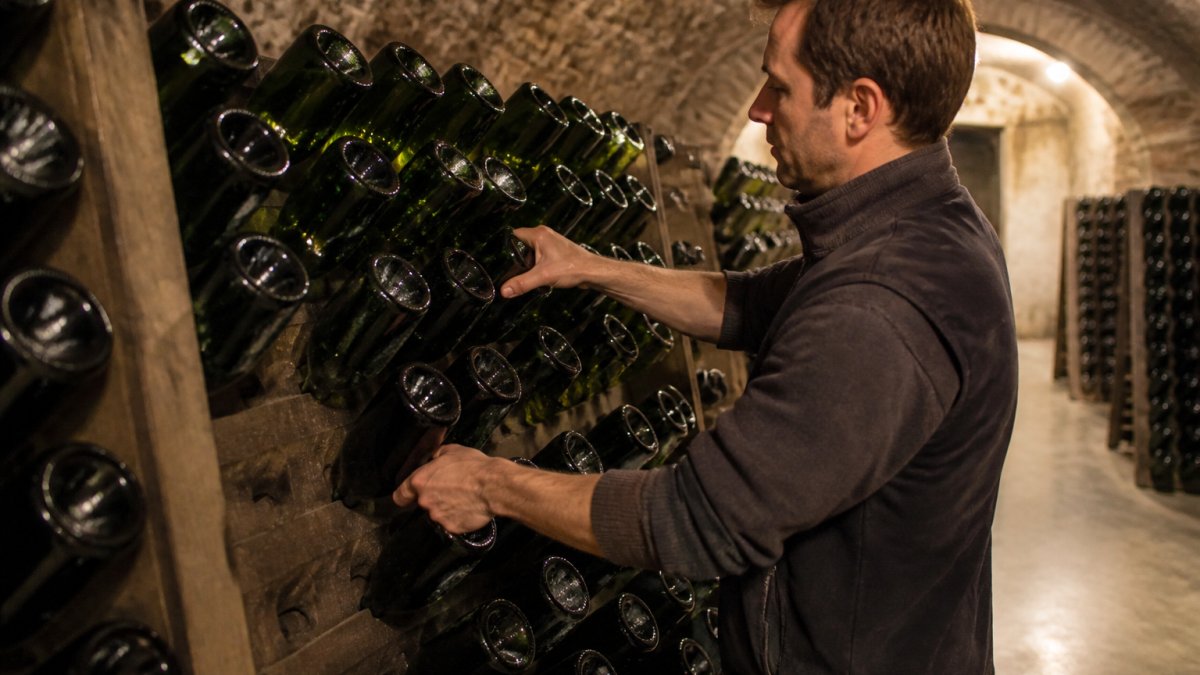
Traditionally this was done by hand, and it takes weeks. Many producers now use mechanical racks called gyropalettes, which do the same job faster.
Next comes disgorgement. The neck of the bottle is frozen, the crown cap is popped, and the plug of frozen sediment shoots out under pressure. The wine is now clear, still fizzy, and briefly open to the air. That gap is closed quickly with the dosage.
Riddling and disgorgement are the fiddly, unglamorous stages. They are also where a lot of the skill lives.
How Long Does Sparkling Wine Take to Make?
Most traditional method sparkling wine takes 18 months to three years from harvest to release. Premium bottles often age longer, and some are held back for several years before they are sold.
How long sparkling wine takes to make depends on the producer's ambition. The legal minimum for the second fermentation and ageing is short, but quality-focused makers go well beyond it.
- Base wine and first fermentation: a few weeks
- Second fermentation: around 6 to 8 weeks
- Lees ageing: 12 months to several years
- Riddling and disgorgement: days to weeks
- Rest after dosage: a few months
So when you open a bottle, you are tasting a decision made years earlier. That patience is a big part of why English fizz commands the price it does.
Dosage, Corking and the Final Blend
Dosage is the small top-up of wine and sugar added after disgorgement. It balances acidity and sets the sweetness level, from bone dry to off-dry. The amount is a stylistic choice, not a cheat.
The bottle is then corked, wired and left to rest so the dosage settles into the wine. That final rest matters: it lets the components knit together before release.
Blending runs alongside all of this. Producers combine different grapes, vineyards and vintages to build a consistent house style, or bottle a single vintage when the year deserves it.
Fancy tasting the result of all that effort? Black Chalk Classic Brut is a Hampshire traditional method fizz built on Pinot Noir, Chardonnay and Pinot Meunier, aged on its lees for at least 22 months. If a rosé is more your thing, Black Chalk Wild Rose Brut brings the same care with bright red berry fruit. Prefer a pure Chardonnay expression? Burn Valley Vineyard Blanc de Blanc is a small batch, estate bottled take from North Norfolk.


Making English sparkling wine is mostly an exercise in patience: pick early, ferment twice, wait on the lees, then fuss over sediment and dosage until the wine is clean and balanced. It is slow, hands-on work, and the best bottles reward that effort with real depth.
If that sounds like your kind of fizz, WINESLUT curates small producer bottles worth the wait. Delivery is free on orders over £110, and orders are dispatched next working day, carefully packed to arrive intact. Discover exceptional wines and find your next favourite bottle.
Frequently Asked Questions
How is English sparkling wine made?
English sparkling wine is made using the traditional method, the same process used in Champagne. Grapes are harvested, pressed and fermented into a still base wine. That wine is bottled with a small amount of yeast and sugar to trigger a second fermentation, which creates the bubbles. The wine then ages on its lees for months or years, before riddling and disgorgement remove the yeast, and a final dosage sets the style.
Which grapes are used to make English sparkling wine?
The classic trio is Chardonnay, Pinot Noir and Pinot Meunier, the same varieties used in Champagne. English sparkling wine grapes thrive on the chalky soils of southern England, which share geological similarities with the Champagne region. Some producers also make single-variety wines, such as a Blanc de Blancs from 100% Chardonnay, like Burn Valley Vineyard Blanc de Blanc from North Norfolk.
How long does English sparkling wine take to make?
Most English sparkling wines spend at least 12 to 18 months ageing on their lees after the second fermentation, and many premium examples age for two to three years or more. Add the time for harvest, pressing and the first fermentation, and the whole process from grape to bottle often takes two to four years. Extended lees ageing builds the creamy texture and brioche notes that define serious traditional method sparkling wine.
Is English sparkling wine made in the same way as Champagne?
Yes, the production method is essentially identical. Both use the traditional method: a second fermentation in bottle, extended lees ageing, riddling and disgorgement. The difference lies in the terroir, the grapes and the ageing choices. English vineyards sit on chalk soils similar to those in Champagne, but the cooler climate brings higher acidity and a fresher, more citrus-driven style. Try Black Chalk Classic Brut from Hampshire to taste that precision for yourself.