

Dessert Wine: A Guide to Sweet Wines & Pairings
Table of Contents
- Dessert Wine: A Sweet Revolution Worth Exploring
- The Main Types of Dessert Wine
- Dessert Wine and Food Pairing: Beyond the Pudding
- How to Serve Dessert Wine Without the Fuss
- Dessert Wine Gift Ideas for Hosts and Friends
- Three Bottles Worth Trying
- Conclusion
- Frequently Asked Questions
Last Updated: 20 October 2026
Dessert Wine: A Sweet Revolution Worth Exploring
Dessert wine is a sweet wine made from grapes that have been concentrated by late harvesting, noble rot, or drying, then balanced with enough acidity to keep it fresh rather than cloying. It is the most misunderstood category on the shelf, and the most rewarding once you stop treating it as an afterthought.
At WINESLUT, we taste every bottle before it goes live, and the dessert wines that make the cut are never the syrupy supermarket stuff.
Here is the thing most guides get wrong: sweetness is not the point. Balance is. A great dessert wine finishes clean and makes you want a second glass, not a lie-down.
Below, we break down the main styles of dessert wine, what to pair them with, how to serve them without ceremony, and three bottles we would happily put on your table this month.
The Main Types of Dessert Wine
Dessert wines split into two broad families: wines made sweet by how the grape was grown or handled, and wines made sweet by fortification or drying. Knowing which family a bottle belongs to tells you most of what you need about how it will taste.
Late Harvest and Botrytised Wines
Late harvest is exactly what it sounds like: grapes left on the vine past normal ripeness so sugars concentrate and acidity stays intact. Botrytised wines take it further, using Botrytis cinerea, a "noble rot" that shrivels berries and intensifies everything inside them.
These wines tend to be golden, honeyed and bright. Think apricot, marmalade, ginger, and a finish that stays with you. They are lower in alcohol than fortified styles, usually under 14%, which makes them dangerously easy to drink.
Cool-climate vineyards produce the maritime acidity that keeps sweet wines electric rather than heavy, and small producers are doing genuinely exciting things with aromatic grapes.
Fortified and Passito Styles
Fortified dessert wines have grape spirit added during fermentation, which stops the yeast and leaves residual sugar behind. Port and sweet Sherry are the famous examples, and they bring higher alcohol and darker, nuttier flavours.
Passito is the Italian method: grapes are dried after picking, on the vine or in crates, concentrating sugar and flavour before pressing. The result is rich, textured and often surprisingly fresh, with a grip that stops it feeling like syrup.
The practical difference? Late harvest and botrytised wines are lighter and more delicate. Fortified and passito styles are weightier and pair with stronger flavours.
Style |
How It Gets Sweet |
Typical Feel |
Serve It With |
|---|---|---|---|
Late harvest |
Grapes left on the vine |
Light, honeyed, bright |
Blue cheese, fruit tarts |
Botrytised |
Noble rot concentrates berries |
Golden, intense, acidic |
Foie gras, Roquefort |
Fortified |
Grape spirit added |
Rich, nutty, warming |
Dark chocolate, nuts |
Passito |
Grapes dried after picking |
Textured, figgy, grippy |
Aged cheese, almond biscuits |
Dessert Wine and Food Pairing: Beyond the Pudding
Dessert wine and food pairing works on one rule: the wine must be sweeter than the food. Get that right and almost anything works. Get it wrong and both taste flat.
The classic move is cheese. A botrytised wine with a salty blue is one of the great partnerships in food, because the salt cuts the sugar and the sugar softens the salt. Aged hard cheeses work too.
Puddings are trickier than people expect. A wine sweeter than a tart fruit dessert sings. A wine matched to a very sweet sticky toffee pudding can taste thin by comparison.
Then there is the savoury route, which most people never try. A late harvest white with a sharp blue cheese or a plate of cured meat is a genuinely different experience, and it is how we would serve dessert wine at a dinner party if we wanted to surprise people.

How to Serve Dessert Wine Without the Fuss
Serve dessert wine in a small glass, well chilled for white styles, and in modest pours. That is the whole ritual. You do not need a special decanter, a specific glass shape, or a sommelier hovering nearby.
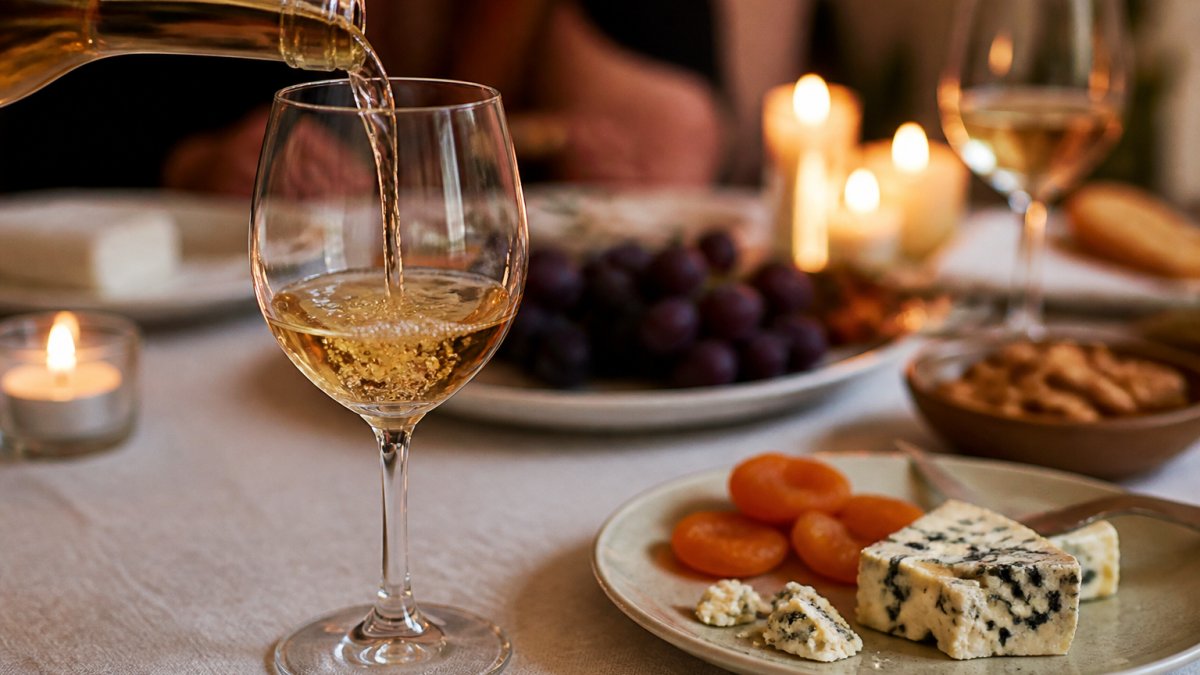
A few practical notes:
Burn Valley Vineyard Schönburger Late Harvest →
- Pour small. A 50-75ml pour is plenty. These wines are intense, and a full glass goes warm before you finish it.
- Chill whites to 8-10°C, serve fortified styles slightly cooler than room temperature.
- Use a small tulip or copita glass if you have one, but a small white wine glass is fine.
- Open it before the pudding, not after. The wine is part of the meal, not a finale.
Serving dessert wine should feel like opening a good bottle, not performing a ceremony. If a guide tells you otherwise, ignore it.
Dessert Wine Gift Ideas for Hosts and Friends
A bottle of dessert wine is one of the most underrated gifts you can bring to a dinner. It says you thought about the end of the meal, not just the beginning, and it is far more memorable than another bottle of red.
The trick is matching the bottle to the host. For someone who loves cheese, go botrytised or late harvest. For a chocolate person, a fortified style. For the curious drinker who has tried everything, a passito from a small estate is the bottle that gets remembered.

Presentation matters less than you think. A good dessert wine with a handwritten note beats an elaborate hamper every time.
Three Bottles Worth Trying
We stock a small, hand-picked range, and three dessert wines currently earn their place on our shelf.
Burn Valley Vineyard Schönburger Late Harvest (£39.00) is the English answer to the question nobody asked but everyone should. Made by the Robinson sisters in North Norfolk from late-hung Schönburger, it pours golden amber with apricot, lychee and orange marmalade, then finishes with a maritime acidity that keeps it bright. At 8.7% ABV it is light enough to drink with cheese rather than after it. This is the bottle we reach for when someone says they do not like sweet wine.
Disznókő Tokaji Late Harvest (£32.00) comes from a historic First Growth estate in Tokaj, made mostly from Furmint. Fresh pear, greengage and dried pineapple, with crème brûlée and wildflower honey underneath, cut by a racy citrus spine. Serve it at 11-13°C and it behaves like a white wine with a secret. Vegan, too.
Bissoni Albana di Romagna Passito (£63.00) is the special-occasion bottle. Raffaella Bissoni's organic passito from a five-hectare estate dries two-thirds of its grapes on the vine with noble rot, giving honey, orange zest, dried fig and a faint tannic grip that stops it feeling heavy. Albana was the first Italian white granted DOCG status, and this is why it earned it.

Wines of Germany guide to dessert wine styles
Conclusion
The hardest part of dessert wine is not understanding it. It is getting past the assumption that sweet means simple. These are some of the most carefully made wines in the world.
At WINESLUT, we hand-taste every bottle before it earns a place on the site, and we will happily point you towards the right one for your table. Free delivery on orders over £110, next working day dispatch, and everything packed properly so it arrives intact.
Search our collection and find the bottle that finishes the meal properly.
Frequently Asked Questions
What are the main types of dessert wine?
The main types of dessert wine fall into three broad groups. Late harvest wines are made from grapes left on the vine longer to concentrate their sugars. Botrytised wines, such as Tokaji, use grapes affected by noble rot for a honeyed, complex flavour. Fortified wines like Port are strengthened with grape spirit, while passito wines are made from grapes dried after picking. Each style delivers a different balance of sweetness and acidity, so there is a dessert wine for every palate.
Should dessert wine be served chilled?
Most dessert wines benefit from chilling, though the ideal temperature varies. Late harvest and botrytised whites, such as Tokaji, are best served at 11-13°C to keep their acidity fresh and their honeyed notes in balance. Fortified wines like Port are usually served slightly warmer, around 15-18°C. A general rule: the sweeter and lighter the wine, the colder it should be. Take bottles out of the fridge 10 minutes before pouring to let the aromas open up.
How long does dessert wine last once opened?
An opened bottle of dessert wine will keep for around three to five days in the fridge with the cork replaced, thanks to its higher sugar and alcohol content. Fortified dessert wines can last two to four weeks. To stretch it further, decant the remaining wine into a smaller bottle to reduce the air gap, or use a vacuum stopper. Always store it upright and away from light. If it starts to smell like vinegar, it is time to bin it.
Is Port a dessert wine?
Yes, Port is a fortified dessert wine, though it is not the only style worth knowing. It comes from Portugal's Douro Valley and is strengthened with grape spirit, which stops fermentation and leaves natural sweetness. Ruby and tawny Ports are the most common, with tawny offering nutty, caramel notes from barrel ageing. Port pairs well with blue cheese, dark chocolate, and nuts. It is a classic dessert wine gift, but it is just one option among many sweet wines worth exploring.
Sweet wines are the last thing most hosts think about and the first thing guests remember. WINESLUT curates independent, small-producer bottles that make the end of the meal the best part, with free delivery over £110, next working day dispatch, and Klarna available at checkout. Search the collection and let us pick your next bottle.